
At first glance, an arc trainer and an elliptical seem to serve the same purpose: low-impact cardio.
But once you look closer—at movement patterns, muscle loading, and long-term usability—the differences become impossible to ignore.
This guide explains Arc Trainer vs Elliptical from a practical perspective:
how each machine works, who each one is best for, how to use them correctly, and what to watch for when choosing a brand or model.
목차
- What Is an Arc Trainer?
- What Is an Elliptical (Cross Trainer)?
- Arc Trainer vs Elliptical: Biomechanics & Motion Path
- How to Choose the Right Brand or Model
- Final Verdict: Arc Trainer vs Elliptical
What Is an Arc Trainer?
An arc trainer is a low-impact cardio machine where the footplates move forward and backward along a fixed arc-shaped path, rather than a continuous oval loop.
This motion keeps the feet under the knees, reduces joint shear, and allows users to generate high resistance with less perceived joint stress.
It feels like a controlled blend of:
- Stair climbing
- Elliptical gliding
- Cross-country skiing
—but without the joint compression of running or stepping.
Arc Trainer: Key Features
Arc Motion Path
The pedals travel along a forward-and-back arc instead of a circular loop, keeping joints in a more neutral position.
Adjustable Incline
Incline changes directly shift muscle emphasis rather than just increasing difficulty.
High Resistance Capability
Allows strength-focused cardio and HIIT-style training without impact.
Lower-Body Dominant Design
Emphasizes glutes, quads, and hamstrings more than most ellipticals.
Joint-Friendly Load Distribution
Designed to reduce knee and hip stress, even at higher intensities.
Who the Arc Trainer Is Best For
- People with knee or hip sensitivity
- Rehab or post-injury conditioning users
- Athletes seeking high-output, low-impact training
- Users focused on calorie efficiency and power-based cardio
- Gyms serving older members or performance-oriented clients
If your users need intensity without joint punishment, the arc trainer fits naturally.
How to Use an Arc Trainer Correctly
Many arc trainers sit unused simply because people treat them like ellipticals.
Proper Arc Trainer Technique
- Start with a low incline to learn the motion.
- Maintain an upright posture—avoid leaning forward.
- Drive through the heels, pushing down and slightly backward.
- Use incline intentionally to shift muscle focus.
- Favor shorter, higher-intensity sessions over long endurance workouts.
일반적인 실수
- Leaning on handles
- Using excessive resistance too early
- Treating the machine like a treadmill
Used correctly, the arc trainer delivers high mechanical output with low joint cost.

What Is an Elliptical (Cross Trainer)?
An elliptical, often called a cross trainer, is a low-impact cardio machine where the footplates follow a continuous oval-shaped (elliptical) path.
Most models include moving handles, allowing users to engage both upper and lower body in a smooth, rhythmic motion that closely mimics walking or running.
Elliptical: Key Features
- Elliptical Stride Path
Smooth, cyclical motion that feels familiar to most users. - Dual-Action Handles
Engages arms, shoulders, and upper back along with the legs. - Wide Resistance Range
Suitable for beginners through intermediate users. - Preset Training Programs
Fat burn, interval, and endurance modes are common. - High Accessibility
Minimal learning curve, ideal for unsupervised use.
Who the Elliptical Is Best For
- General fitness users
- Beginners and casual exercisers
- Weight-loss programs focused on consistency
- Long-duration, steady-state cardio
- Facilities with high traffic and limited coaching support
If ease of use and broad appeal matter most, the elliptical usually wins.
How to Use an Elliptical Correctly
Ellipticals are intuitive—but technique still matters.
Proper Elliptical Technique
- Stand tall and avoid resting weight on the console.
- Let the legs drive the motion; arms assist naturally.
- Increase resistance before increasing speed.
- Maintain smooth, controlled cadence.
- Use ellipticals for longer sessions, warm-ups, or recovery days.
일반적인 실수
- Hanging body weight on handlebars
- Excessive forward knee drive
- Chasing speed instead of resistance
Used properly, ellipticals provide consistent, joint-friendly full-body cardio.
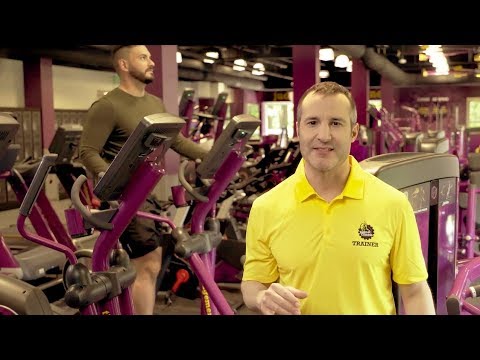
Arc Trainer vs Elliptical: Biomechanics & Motion Path
| Aspect | 아크 트레이너 | 타원형 |
|---|---|---|
| Motion Path | Forward–back arc | Continuous oval loop |
| Knee Stress | Lower | Moderate (form-dependent) |
| Muscle Emphasis | Lower-body dominant | Balanced full-body |
| Training Style | HIIT / power cardio | Endurance / steady cardio |
| Learning Curve | Moderate | Very low |
How to Choose the Right Brand or Model
Choosing the right machine is less about brand reputation and more about mechanical quality and long-term suitability.
What to Look For in an Arc Trainer
- Smooth, stable arc motion with no lateral wobble
- Durable incline motor and bearing system
- Rigid frame that remains stable under high resistance
- Clear performance metrics (watts, METs, workload data)
- Reliable after-sales support and parts availability
What to Look For in an Elliptical
- Natural stride length and proper pedal alignment
- Smooth resistance transitions with no lag
- Solid handlebar linkage without looseness
- Console clarity over flashy entertainment features
- Easy access to replacement parts and service support
Avoid choosing equipment based solely on screens or software.
Mechanical reliability matters far more over time.
Final Verdict: Arc Trainer vs Elliptical
Both machines deliver low-impact cardio—but they are designed for different users, training styles, and environments.
An arc trainer is the better choice when intensity, joint protection, and performance-focused training are priorities.
An elliptical is the better choice when accessibility, familiarity, and long-duration cardio matter most.
There is no universal “best” machine—only the right machine for your users, your space, and your training goals.
If you’re still unsure which option fits your facility—or how to balance both in a single cardio zone—discussing your needs with experienced equipment specialists can save time, budget, and future replacement costs.
Our experts work with gyms, studios, and distributors to match the right cardio equipment to real-world usage, not marketing claims.
If you’d like guidance on selecting the right arc trainer or elliptical for your specific application, reach out and explore your options with tzfit team.
Making the right equipment decision upfront leads to better utilization, happier users, and stronger long-term returns.